 العربية
 Italiano
 Français
Olive tree water needs: drought-hardy, but not indifferent
Olive trees are very resistant to drought and recover quickly: in studies reported by FAO, trees rehydrated completely within three days of irrigation after a water deficit that had brought leaf water potential down to −4.0 MPa. They can survive in climates with only 150–200 mm of annual rainfall, but economic production requires much more water, from rain or irrigation (FAO, 2012).
Irrigation changes the economics of an olive grove. FAO notes that in intensive orchards it allows production to start from the second to the fourth year after planting, with average yields of up to 10–15 tonnes per hectare under optimal conditions and less variation from alternate bearing. Traditional groves, with 50 to 100 trees per hectare, yield from less than 1 up to 5 tonnes of olives per hectare (FAO, 2012).
To estimate water needs, agronomists multiply the reference evapotranspiration (ETo) by a crop coefficient (Kc). For olive orchards in arid, Mediterranean-type climates, FAO's recommended Kc values range from 0.40–0.55 in winter and 0.45–0.55 in spring to 0.50–0.55 in summer and 0.55–0.65 in autumn (FAO, 2012). They are then adjusted for tree density, ground cover and any grass between the rows.
Critical stages and regulated deficit irrigation for olives
Not every week of the season matters equally. FAO recommends avoiding water stress from floral development to fruit set in spring; the initial rapid growth of the fruit and the period of active oil accumulation are also sensitive to water deficit (FAO, 2012). Pit hardening, about two months after fruit set, marks the start of the period in which a controlled deficit is best tolerated.
This is the basis of regulated deficit irrigation (RDI). According to FAO, most documented evidence shows that RDI strategies supply only 30 to 70% of the water needed for fully irrigated trees, and about 100 mm per season is needed in drier climates to increase yields significantly. In one study on table olives, reducing applied water by 21% did not affect fruit yield or revenue, whereas a deeper cut reduced revenue by 25% because the fruit was smaller (FAO, 2012).
Water also affects quality: as the volume applied increases, the concentration of phenolic compounds in the oil decreases, which is why oils from irrigated orchards are usually less bitter and pungent (FAO, 2012). Managing a deficit precisely therefore means measuring water status rather than guessing it.
- Spring, flowering and fruit set: keep trees well watered.
- Early fruit growth: avoid marked stress.
- Summer, from pit hardening: a moderate, controlled deficit is possible.
- Late summer and autumn, oil accumulation: relieve stress, since severe deficits reduce oil content.
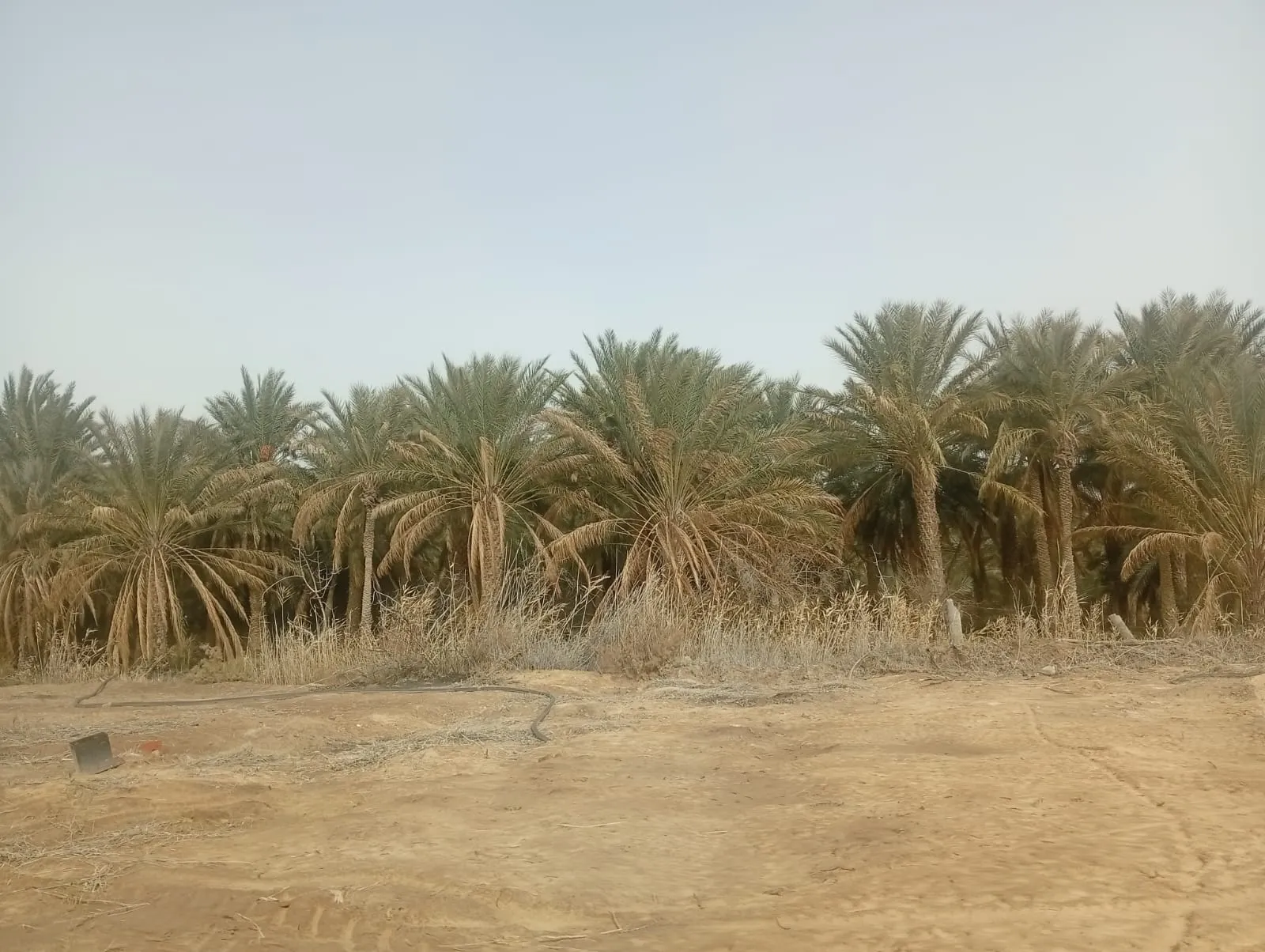
Date palm water needs in the oases
The date palm needs heat and plenty of water. FAO's manual on date palm cultivation notes that, under irrigation, the palm endures exceptional temperatures of around 56 °C for several days, that growth reaches its optimum at about 32 °C, and that it requires a copious water supply (FAO, 2002).
Requirements are high. FAO reports an annual consumption of about 23,600 m³ per hectare for Deglet Nour palms in Tozeur, with the highest monthly use in July and August; summer requirements are almost double the winter ones (FAO, 2002). Wind, temperature, low humidity and soil salinity, which calls for extra water for leaching, all push demand up.
Where the water goes matters too. Mature palms extract about 40% of their water from the top 50 cm of soil, 70% from the top metre and 90% from the top 1.5 m, whereas young palms have roots only 25–50 cm deep, close to the trunk (FAO, 2002). Water should be placed within these limits, and young plantations need frequent irrigation.
Flood or drip irrigation: comparing the options
Flood irrigation is the oldest and most widely used method in date palm cultivation. Its running costs are low, but it is hard to manage efficiently, labour-intensive, wets areas without palms and is poorly suited to sandy soils. Localised methods, drip and micro-sprinklers, are more efficient because the water reaches the root zone rather than the spaces between palms; drip is unaffected by wind but costs more to install and needs very clean water (FAO, 2002).
For olives, FAO recommends applying water by micro-irrigation to meet the trees' daily needs. Where supply is limited, drip irrigation is essential, with as few emitters per tree as possible, and where water is delivered at long intervals, on-farm storage lets growers irrigate as often as needed (FAO, 2012).
- Flood or basin: low equipment cost, but heavy labour, large losses and volumes that are hard to measure.
- Micro-sprinklers: suit wide palm spacing, provided the spray is kept off the crown of young palms (FAO, 2002).
- Surface drip: efficient, easy to automate and to combine with fertigation; needs good filtration.
- Subsurface drip: almost no evaporation from the soil surface, but clogging is harder to spot.
- On-farm storage basin: separates the water turn from the crop's actual needs.
Water quality and salinity
Salinity is the main water-quality constraint in southern Tunisia. The date palm is not a true halophyte, even though it grows in very salty places, and it does better when soil and water are fresh (FAO, 2002). FAO cites limits of 4 dS/m for average soil salinity (ECe) and 2.7 dS/m for irrigation water (ECw), and reports that at 90% of maximum yield, ECe reaches 6.8 dS/m and ECw 4.5 dS/m (FAO, 2002).
Olive trees have long been planted on marginal land because of their high resistance to drought, lime and salinity (FAO, 2012), but salt still builds up in the root zone under drip irrigation if it is not washed out.
- Analyse the water: EC, sodium, chloride, bicarbonates, hardness and iron.
- Add a leaching requirement on top of the crop's net water need (FAO, 2002).
- Monitor salinity in the root zone, not only in the water.
- Filter and treat hard or iron-rich water to protect the drippers (Kafkafi and Tarchitzky, 2011).
Fertigation of olive trees and date palms
Drip irrigation opens the way to fertigation: fertilisers dissolved in the irrigation water reach the wetted root zone in small, frequent doses matched to the growth stage. Kafkafi and Tarchitzky describe this 'spoon-feeding' approach as a way to make the most of each unit of fertiliser and limit losses to groundwater, and note that fertigation has allowed growers to farm sand dunes once classed as non-agricultural land (Kafkafi and Tarchitzky, 2011).
Our smart fertigation guide covers equipment, EC and pH management and common mistakes in more detail.
- Base the programme on soil, leaf and water analyses.
- Use fully soluble fertilisers; potassium sulphate is widely used under saline conditions (Kafkafi and Tarchitzky, 2011).
- Split doses through the season rather than applying large amounts at once.
- Flush the lines with clean water after each fertigation and check the filters.
Sensors and smart irrigation for orchards and oases
Deficit irrigation and leaching only work if water status is measured. FAO considers stem water potential a more reliable indicator of olive tree water status than midday leaf water potential, with typical reference values of −1.0 to −1.2 MPa for mature, fully productive trees on sunny summer days, and −1.7 to −2.5 MPa for moderately stressed trees (FAO, 2012). These measurements are precise but manual.
Soil moisture sensors offer a practical, continuous alternative: installed at several depths in the root zone, they show when the soil falls below a threshold and how far the water goes (Shortridge and Porter, 2021). Combined with weather data, flow meters and connected valves, they make it possible to run a deficit strategy, schedule leaching and detect leaks or clogged lines in a palm grove that nobody can walk through every day.
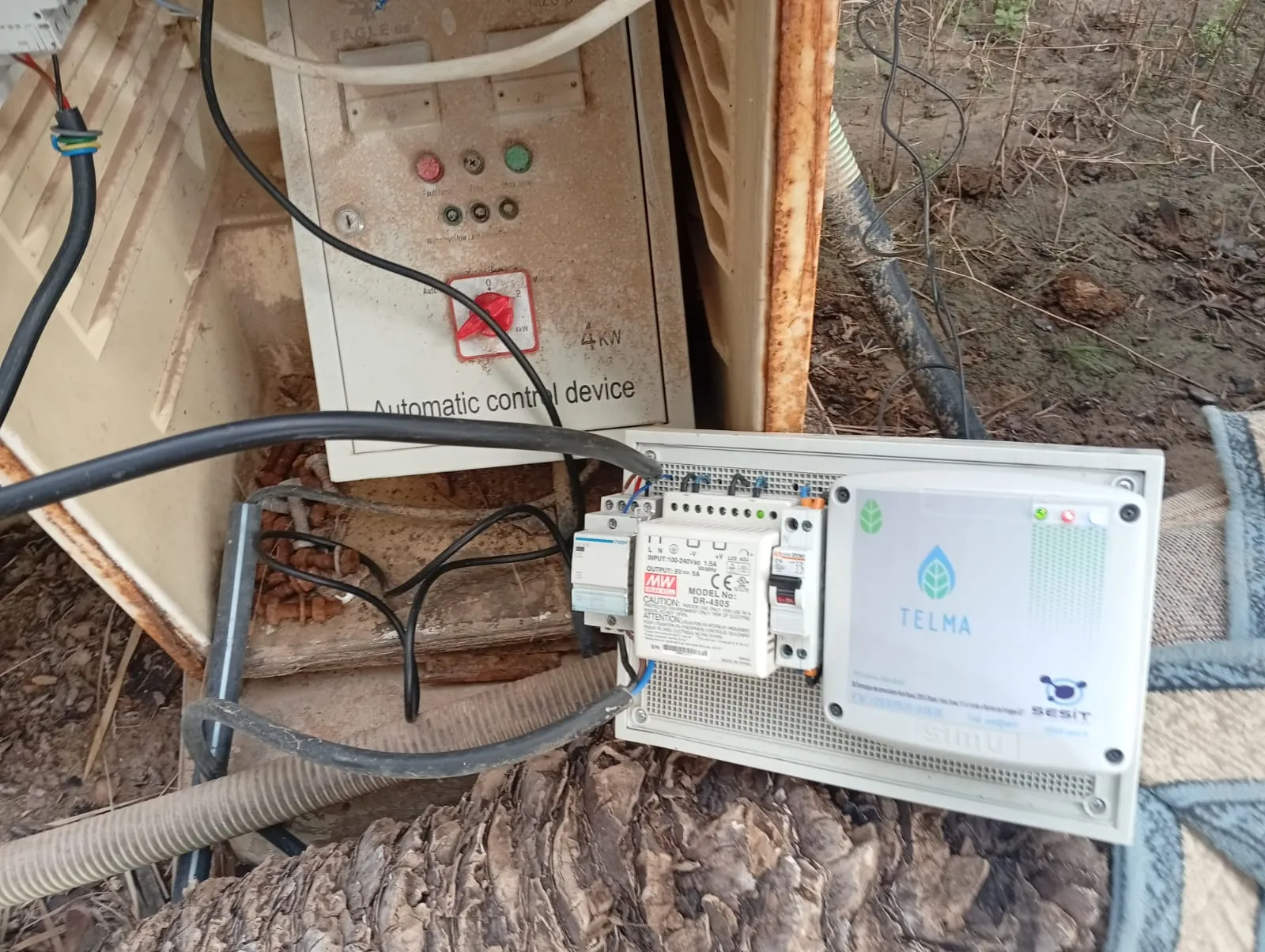
In Nefta, in the Djerid, SESIT has operated a smart irrigation station since September 2026, with the GDA Rmada of Nefta and the support of the SHANTI association: smart valves, a connected basin and real-time monitoring control irrigation automatically and remotely, in an oasis where water is scarce and salinity is high.
Common mistakes, and how to avoid them
Most losses in olive groves and palm groves come from a handful of habits that are easy to correct once the water is measured.
- Irrigating olives the same way all season, instead of protecting flowering and fruit set and saving water after pit hardening.
- Irrigating too often on clay soils when supply is limited: FAO advises irrigating as infrequently as feasible, once or twice a week, to limit evaporation and avoid prolonged exposure of the roots to wet soil (FAO, 2012).
- Watering young palms too deep, below their shallow roots (FAO, 2002).
- Wetting the crown of young palms with sprinklers (FAO, 2002).
- Forgetting the leaching requirement with saline water, so that salt accumulates.
- Skipping filtration and line flushing, which leads to clogged drippers.
- Relying on a fixed timer through heatwaves and cool spells alike.
Frequently asked questions
How much water does an olive tree need?
It depends on the climate, tree density, soil and yield target. Water needs are estimated as reference evapotranspiration (ETo) multiplied by a crop coefficient, around 0.40–0.65 for olives depending on the season (FAO, 2012). With regulated deficit irrigation, growers typically supply 30 to 70% of full requirements, and about 100 mm per season already increases yields significantly in drier climates.
How much water does a date palm need per year?
Requirements are high. FAO reports about 23,600 m³ per hectare per year for Deglet Nour palms in Tozeur, with peak use in July and August and summer requirements almost double those of winter (FAO, 2002). Actual needs vary with soil, salinity, wind and the irrigation method.
When should olive trees be irrigated?
Priority goes to spring, from floral development to fruit set, then to early fruit growth and the oil accumulation period in late summer and autumn. After pit hardening, during the summer, a moderate, controlled deficit is usually well tolerated and saves water (FAO, 2012).
Is drip irrigation suitable for date palms?
Yes. Localised methods are more efficient than flooding because water reaches the root zone rather than the spaces between palms (FAO, 2002). Drip needs clean, well-filtered water, and for young palms the water must be placed within their shallow root zone, close to the trunk.
Can I irrigate olives or palms with saline water?
Often, but carefully. For date palms, FAO cites limits of 4 dS/m for soil salinity and 2.7 dS/m for irrigation water before yields start to fall, and extra water is needed to leach salts below the roots (FAO, 2002). Analyse the water, monitor salinity in the root zone and plan leaching.
What is regulated deficit irrigation?
It means deliberately supplying less water than the crop's full requirement at stages where the tree tolerates it, such as olive pit hardening, while protecting sensitive stages. It saves water with little or no loss of yield when well managed, but it requires measuring soil or tree water status (FAO, 2012).
Can olive trees and date palms be fertigated?
Yes. Drip irrigation makes it easy to apply soluble fertilisers in small, frequent doses matched to the growth stage. Base the programme on soil, leaf and water analyses, check fertiliser compatibility and flush the lines after each application. TELMA can dose fertiliser into the irrigation water.
Can an existing irrigation system in an oasis be automated?
In many cases, yes. Connected valves, soil moisture sensors and flow meters can be added to an existing drip network or a storage basin. At Nefta, SESIT's smart irrigation station controls irrigation automatically and remotely. A free site study checks the network, water and power supply first.
Is there support for drip equipment in Tunisia?
Yes, through public schemes: the regional agricultural development offices (CRDA) support water-saving irrigation equipment, and APIA manages incentives for agricultural investment. Conditions change, so check them at www.apia.com.tn and with your CRDA. SESIT can provide the technical documents your application needs.
Sources
- Gucci R., Fereres E. and Goldhamer D. A. (2012). Olive. In: Steduto P. et al., Crop yield response to water. FAO Irrigation and Drainage Paper 66
- FAO (2002). Date palm cultivation, chapter VII: Date palm irrigation. Plant Production and Protection Paper 156 Rev. 1
- FAO (2002). Date palm cultivation, chapter IV: Climatic requirements of date palm. Plant Production and Protection Paper 156 Rev. 1
- Kafkafi U. and Tarchitzky J. (2011). Fertigation: a tool for efficient fertilizer and water management. IFA and IPI
- Shortridge J. and Porter W. (2021). Soil moisture sensors for agricultural irrigation: an overview on sensor types. Virginia Cooperative Extension, BSE-338P
Irrigating olives or date palms?
Tell us about your grove: area, tree age, water source and current irrigation. We will carry out a free study and propose a TELMA set-up adapted to your orchard or oasis. WhatsApp: +216 55 879 318.