
 العربية
 Italiano
 Français
How drip irrigation works
Drip irrigation, also called localised or trickle irrigation, carries water through pipes and laterals to emitters placed close to the plants. Each dripper wets a limited volume of soil around the roots instead of the whole field. Water spreads outwards across the surface and downwards through the profile from this point source, creating a wet bulb whose shape depends on the soil (Kafkafi and Tarchitzky, 2011).
Because water reaches the root zone rather than the spaces between plants, localised methods are more efficient than flood irrigation, and drip is unaffected by wind. On the other hand, it costs more to install and needs very clean water (FAO, 2002).
Drip is now a mainstream technique in North Africa. In Tunisia, localised irrigation covered about 241,000 hectares of the 451,500 hectares equipped for full-control irrigation in 2023, according to FAO AQUASTAT. A typical installation includes the following components.
- A pump or pressurised supply, with a storage basin where needed.
- A filtration station: screen, disc or sand filters, depending on the water.
- Main and sub-main pipes, pressure regulators and a valve for each sector.
- Laterals with drippers, inline or on-line, pressure-compensating or not.
- A fertiliser injector for fertigation, with a backflow-prevention valve.
The limits of conventional drip irrigation
A drip system is only as good as its management. Most conventional installations run on a timer: the same duration at the same time, whatever the weather or the state of the soil. Over a season, that means over-watering on cool days and stress during heatwaves.
None of these problems is visible from the farm gate. They show up later, as uneven growth, wasted water or a higher electricity bill for pumping.
- Fixed schedules that ignore soil moisture, rainfall and evapotranspiration.
- Emitter clogging, which affects both the application rate and the uniformity of watering and is one of the greatest problems in drip irrigation (Kafkafi and Tarchitzky, 2011).
- Leaks and burst pipes that can go unnoticed for days on a large plot.
- Pressure differences along long laterals or between sectors, so that some plants receive more water than others.
- Remote plots that nobody can check every day.
What smart drip irrigation adds: sensors, connected valves and alerts
Smart drip irrigation closes the loop between measurement and action. Instead of following a clock, the controller irrigates when the soil needs water and stops when the target is reached.
The farmer stays in charge. Set points, thresholds and calendars remain the farmer's decision, and any valve can be switched back to manual control at any time.
- Soil moisture sensors in the root zone, ideally at two or more depths, to trigger irrigation when the soil falls below a threshold (Shortridge and Porter, 2021).
- Weather data from a micro weather station or forecasts, to anticipate hot, windy days.
- Pressure and flow measurements in each sector, to detect leaks, bursts and clogging.
- Connected solenoid valves, opened and closed zone by zone, on site or remotely.
- Alerts on the farmer's phone, and a log of every irrigation for traceability.
Choosing and installing soil moisture sensors
There are two families of sensor. Tension sensors, such as tensiometers and electrical resistance blocks, measure how hard the plant must pull to extract water from the soil. Volumetric sensors, such as capacitance and other dielectric probes, estimate the volume of water in the soil (Shortridge and Porter, 2021). Capacitance probes up to a metre long can measure a whole moisture profile.
A few rules make the readings trustworthy.
- Place sensors in the active root zone of a representative plant, close to a dripper.
- Install pronged dielectric sensors in undisturbed soil; tensiometers need a borehole of the right diameter, with the backfill tamped down so water cannot run along the tube (Shortridge and Porter, 2021).
- Calibrate for your soil: manufacturer equations are a starting point, but a site-specific calibration is more accurate (Shortridge and Porter, 2021).
- Measure at several depths to see whether water reaches the roots or drains below them.
- Provide at least one measuring point per sector with a distinct soil or crop.
Sizing a smart drip irrigation system
Good automation cannot make up for a poorly designed network. Sizing starts with the crop, the soil and the water.
A study of the site before any purchase avoids most expensive mistakes, such as an undersized pump or filters that clog every week.
- Crop water demand at peak season, which sets the flow and the number of sectors that can run at the same time.
- Soil type: sandy soils need shorter, more frequent irrigations than clay soils.
- Water quality: salinity, hardness and iron determine filtration, acidification and the choice of dripper.
- Available pressure and pump capacity, including the pressure needed by filters and injectors.
- Plot layout and slope, to keep pressure even along laterals; pressure-compensating drippers help on long or sloping rows.
- Power and connectivity on site: mains, solar, mobile coverage or long-range radio such as LoRaWAN.
Maintenance: filtration, flushing and clogging prevention
Every drip system needs a filter to stop solid particles from reaching the drippers, and a backflow-prevention valve whenever fertilisers are injected (Kafkafi and Tarchitzky, 2011). The rest of the maintenance programme follows from the water analysis.
With smart irrigation, maintenance becomes predictive: a slow drop in flow in one sector points to clogging before the plants show stress, while a sudden rise points to a leak.
- Clean or backwash filters regularly; the pressure difference across the filter shows when it is due.
- Flush laterals from the end of the line, more often at the start of the season.
- Watch for iron: ferrous iron concentrations as low as 0.15–0.22 g per cubic metre are considered potentially hazardous to drip systems (Kafkafi and Tarchitzky, 2011).
- Calcium-rich, alkaline water can form calcium carbonate deposits; an acid flush, for example with nitric acid, can dissolve chemical precipitates and restore flow, with strict safety precautions (Kafkafi and Tarchitzky, 2011).
- Check that fertilisers are fully soluble and compatible before injecting them.
Costs, return and public support in Tunisia
The cost of smart drip irrigation depends on the area, the number of sectors, the existing network, the number of sensors and valves, filtration, energy and connectivity. Upgrading an existing drip network with sensors and connected valves is a very different budget from building a new installation. We do not publish standard prices: SESIT offers a free study and quotes after a site visit.
The return comes from water and energy saved, more even crops and less time spent checking plots, and it varies with the crop and the starting point. In Tunisia, the Agricultural Investment Promotion Agency (APIA) manages incentives for agricultural investment, and the regional agricultural development offices (CRDA) support water-saving irrigation equipment. Check the current conditions at www.apia.com.tn and with your CRDA, as eligibility and rates change over time.
Smart drip irrigation in Tunisia: Sidi Thabet, INAT and Nefta
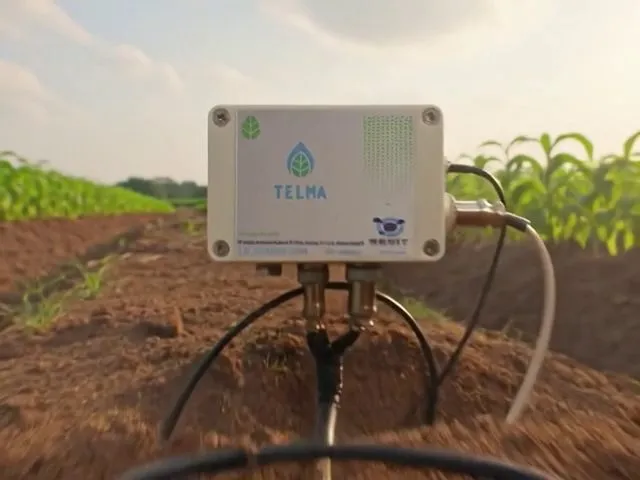
TELMA, SESIT's smart irrigation and fertigation system, brings these functions together: soil moisture sensors, micro weather stations and flow meters, connected field units communicating over LoRaWAN with cellular fallback, smart valves operated zone by zone, remote control from a phone, and alerts for leaks and blockages. It can also dose fertiliser into the drip irrigation water.
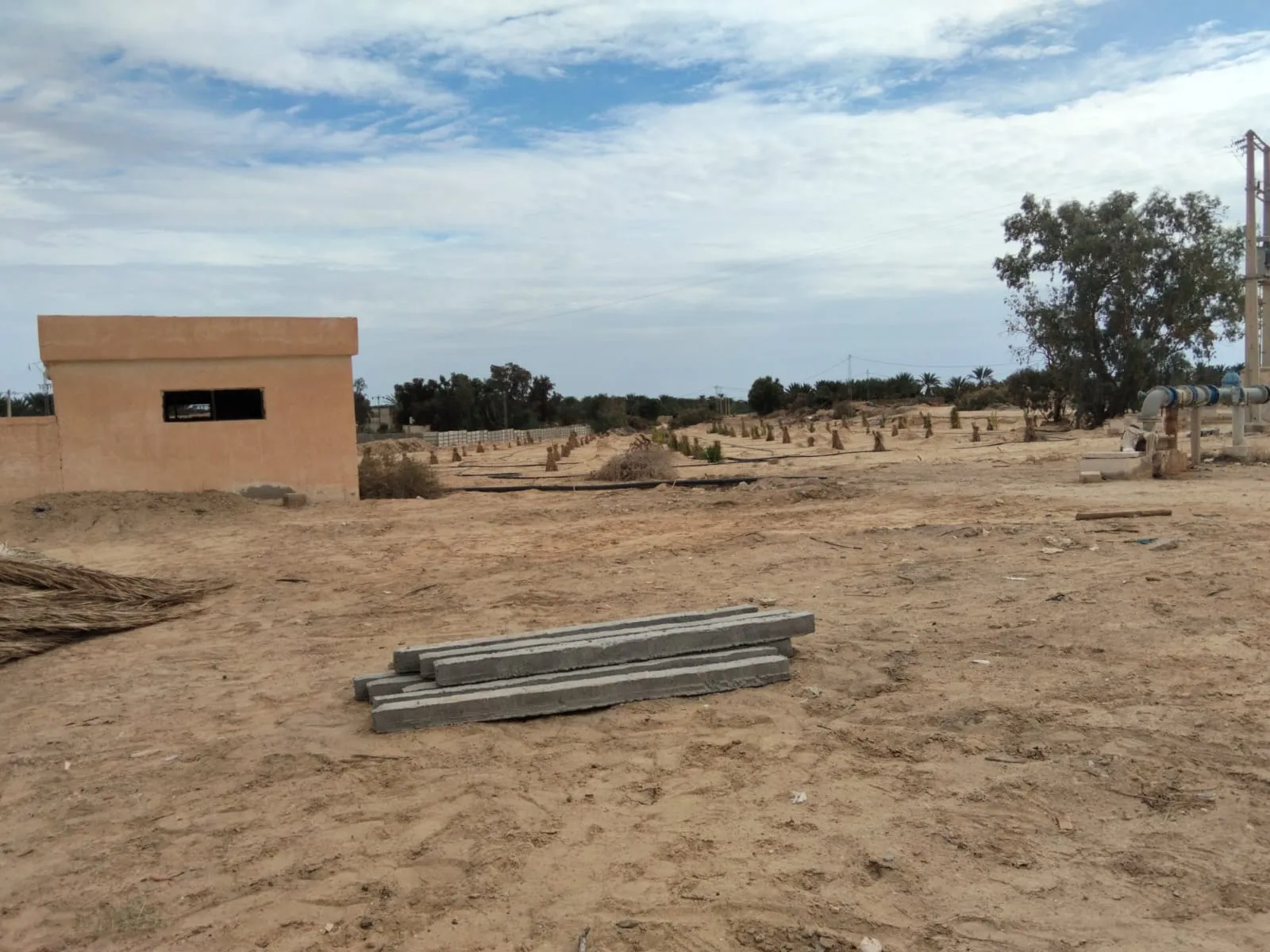
Near Sidi Thabet, north of Tunis, TELMA manages irrigation on peri-urban farmland. In the south, the Nefta smart irrigation station, in service since September 2026 with the GDA Rmada of Nefta and the support of the SHANTI association, combines smart valves, a connected basin and real-time monitoring to control irrigation automatically and remotely, in an oasis where water is scarce and salinity is high.
Leak and clogging detection also draws on research. HydroNeuro, work by SESIT's founder Nasreddine Somaali with Sup'Com, runs a lightweight neural network on an ESP32 microcontroller and reports anomaly detection accuracy above 96% on a laboratory test bench (Somaali et al., 2026).
Frequently asked questions
What is the difference between drip irrigation and smart drip irrigation?
Conventional drip irrigation delivers water close to the plants, usually on a fixed timer. Smart drip irrigation adds measurement and control: soil moisture sensors, weather data, pressure and flow readings, connected valves and alerts. Irrigation starts when the soil needs water, stops at the target, and problems such as leaks or clogged lines are flagged as they happen.
Can I make my existing drip system smart?
In many cases, yes. Sensors, connected valves and a controller such as TELMA can be added to an existing network, sector by sector. The site study checks the condition of the pipes and drippers, the pressure, the filtration and the power supply first, because automation works best on a network that is already sound.
How much water can smart drip irrigation save?
There is no universal figure. Savings depend on how the farm irrigates today, the soil, the crop and the climate. Moving from a fixed timer to irrigation triggered by soil moisture reduces over-watering, and fast leak detection avoids losses that would otherwise run for days. We measure consumption site by site to document the results.
What equipment does a smart drip irrigation system need?
A pump or pressurised supply, filtration, pressure regulators, pipes and drippers, connected solenoid valves for each sector, soil moisture sensors, flow or pressure meters, a controller with a mobile or long-range radio link, and a dashboard with alerts. A fertiliser injector and backflow-prevention valve are added for fertigation.
How many soil moisture sensors do I need?
At least one measuring point per irrigation sector with a distinct soil or crop, ideally with sensors at two or more depths to follow the water through the root zone. Large, uniform plots need fewer points per hectare than small, varied ones. The study defines the number and position of sensors for your farm.
How do I stop drippers from clogging?
Start with a water analysis covering hardness, iron and suspended solids. Choose suitable filtration and clean it regularly, flush the laterals, acidify alkaline water where needed and inject only soluble, compatible fertilisers. Flow monitoring in each sector shows a gradual drop long before plants suffer, so you can act early.
Does it work without internet or mains power?
TELMA field units communicate over LoRaWAN with cellular fallback, which suits plots with weak mobile coverage. Pumps and controllers still need a reliable power supply: mains, solar or battery backup are sized during the study according to the site.
How much does a smart drip irrigation system cost, and is there public support?
The cost depends on the area, the number of sectors, sensors and valves, the condition of the existing network and on-site energy and connectivity. SESIT offers a free study and a quote. In Tunisia, APIA and the regional CRDAs run support schemes for agricultural investment and water-saving equipment; check current conditions with them directly.
Are training and support included?
Yes. SESIT trains your team during installation so that they understand the dashboard, alerts and manual override, then provides technical support, remote diagnostics, on-site visits and preventive maintenance.
Sources
- Kafkafi U. and Tarchitzky J. (2011). Fertigation: a tool for efficient fertilizer and water management. IFA and IPI
- Shortridge J. and Porter W. (2021). Soil moisture sensors for agricultural irrigation: an overview on sensor types. Virginia Cooperative Extension, BSE-338P
- FAO AQUASTAT. Country fact sheet: Tunisia (2023 data)
- FAO (2002). Date palm cultivation, chapter VII: Date palm irrigation. Plant Production and Protection Paper 156 Rev. 1
- Somaali N., Hayouni M., Sboui L. and Choubani F. (2026). HydroNeuro: a data-efficient IoT sensing and edge-AI framework for real-time hydraulic anomaly detection. Sensors, 26(10), 3010
Ready to upgrade your drip irrigation?
Tell us about your plot, your crops, your water source and your current network. We will carry out a free study and propose the right TELMA set-up. WhatsApp: +216 55 879 318.